
Introducción
Entre todas las piedras preciosas, pocas poseen el peso de la historia, la cultura y la belleza natural con tanta fuerza como el jade. Durante siglos, el jade ha sido venerado en diversas civilizaciones, no solo como piedra decorativa, sino también como símbolo de pureza, protección, estatus y equilibrio espiritual. Hoy en día, a medida que la moda y la tradición se fusionan, cada vez más hombres adoptan el jade, especialmente a través de piezas como la pulsera de jade para hombre, no solo por su atractivo estético, sino también por su profundo significado y sus beneficios.
En esta guía completa, profundizamos en lo que hace único al jade: sus orígenes, su herencia cultural y simbólica, y por qué los hombres modernos eligen cada vez más joyas de jade . Tanto si eres nuevo en el mundo de las piedras preciosas como si buscas añadir una pieza significativa a tus accesorios, este blog te ayudará a comprender el encanto perdurable del jade.


¿Qué es el jade? Entendiendo la piedra preciosa
El jade no es uno sino dos minerales principales
El término “ piedra preciosa de jade ” en realidad se refiere a dos minerales distintos que cumplen ciertos criterios estéticos y físicos: la jadeíta y la nefrita.
-
Jadeíta : Un piroxeno rico en sodio y aluminio. Su gama de colores varía desde el verde esmeralda intenso (el codiciado "jade imperial") hasta el lavanda, el blanco, el amarillo, el negro y otros. Al pulirse, suele presentar un aspecto vidrioso y muy translúcido.
-
Nefrita : Un anfíbol de calcio y magnesio (grupo tremolita-actinolita). Se encuentra a menudo en tonos verdes, blancos o incluso negros. Su pulido tiende a ser más aceitoso o ceroso que el de la jadeíta. Aunque suele ser más económica que la jadeíta, su dureza y su aspecto clásico la convierten en un elemento fundamental de la joyería tradicional de jade.
Históricamente, todos estos tipos se han agrupado bajo el nombre de “jade”, debido a su apariencia similar y la dificultad de distinguirlos antes de la mineralogía moderna.
Lo que hace que Jade sea especial más allá de su apariencia
-
Durabilidad y dureza : La estructura microscópica del jade, con sus cristales estrechamente entrelazados, le confiere una gran dureza. Por esta razón, los pueblos antiguos tallaban herramientas, armas, adornos y joyas de jade .
-
Amplia variedad de colores : Dependiendo de las impurezas (hierro, cromo, manganeso, etc.), el jade puede presentarse en tonos verdes, blancos, amarillos, lavanda, negros y más. La famosa jadeíta «verde imperial» sigue siendo una de las más preciadas.
-
Pulido y brillo suaves : El jade de alta calidad, especialmente la jadeíta, posee un pulido vidrioso y translúcido. La nefrita posee un brillo más ceroso. Ambos confieren a las joyas de jade su característica profundidad y apariencia viva.
Esta combinación de resistencia física y gracia estética ayudó al jade a convertirse en una de las piedras preciosas más buscadas en la historia de la humanidad.

Un viaje a través del tiempo: los orígenes y el legado cultural de Jade
La importancia del jade se extiende a través de los continentes. Desde Asia Oriental hasta Mesoamérica, el jade ha sido apreciado durante milenios. Su historia refleja la creciente apreciación de la humanidad por la belleza, la espiritualidad y el simbolismo.
Raíces antiguas del jade en Asia
-
Del Neolítico a las civilizaciones tempranas : Los primeros artefactos de jade datan de hace miles de años. En ciertas regiones de China, el jade (principalmente nefrita) se utilizaba para objetos utilitarios, piezas ornamentales y artículos ceremoniales.
-
China, la "Piedra del Cielo" : En la tradición china, el jade (conocido como "yù" 玉) posee una profunda resonancia simbólica. Representa virtudes como la pureza, la integridad moral, la nobleza y la armonía. Los eruditos confucianos solían elogiar el jade como símbolo de carácter.
-
Uso imperial y de élite : A lo largo de las dinastías, el jade se convirtió en un símbolo de estatus. Las dinastías Ming, Qing y otras crearon intrincadas joyas, adornos y objetos ceremoniales de jade , a menudo reservados para la nobleza o los ricos.
El jade a través del mundo: de Mesoamérica a Polinesia
-
Antiguas civilizaciones maya, azteca y olmeca : En Mesoamérica, la jadeíta de regiones como el Valle del Motagua (Guatemala) era más apreciada que incluso el oro. El jade simbolizaba la vida, la fertilidad y la conexión con lo divino. Objetos como máscaras, estatuas y joyas se tallaban en jadeíta con fines religiosos y ceremoniales.
-
Culturas indígenas desde Nueva Zelanda hasta el sur de Asia : Por ejemplo, el pueblo maorí de Nueva Zelanda históricamente apreciaba una forma de nefrita conocida como "piedra verde" (pounamu). Estas piedras se tallaban en herramientas, adornos y talismanes, cada pieza con un valor ancestral y protección espiritual.
-
Difusión y apreciación global : A través del comercio, la migración y el intercambio cultural, el jade llegó a muchas partes del mundo. Su atractivo universal, belleza, resistencia y simbolismo lo convirtieron en una piedra preciosa para todas las culturas.
¿Por qué se llama al jade la «gema suprema»?
Debido a sus profundas raíces culturales y su atractivo atemporal, muchas tradiciones se refieren al jade como la “Gema Suprema” o la “Joya del Cielo”.
Ha simbolizado la nobleza, la virtud y la integridad moral.
-
Ha representado protección, longevidad y bienestar.
-
Sus cualidades estéticas lo hacían ideal para joyas, adornos e incluso artefactos funerarios que se creía que ofrecían protección espiritual más allá de la vida.
Esta rica herencia hace que el jade sea más que una piedra preciosa: es un legado cultural vivo.
¿Qué simboliza el jade? El significado de la piedra
Al usar o llevar jade, te conectas con miles de años de simbolismo cultural. Los significados varían ligeramente entre culturas, pero algunos temas se mantienen constantes.
Armonía, equilibrio y paz interior
El jade suele representar serenidad, equilibrio y calma interior. Se cree que armoniza las energías, ayudando a estabilizar las emociones y fomentando la claridad. Esto convierte al jade en una piedra preciosa favorita entre quienes buscan la atención plena y el equilibrio emocional.
Protección y buena suerte
En muchas culturas, especialmente en Asia Oriental, el jade se considera un talismán protector. Se cree queusar joyas de jade aleja la energía negativa, el peligro y la desgracia. Una pieza de jade rota (como una pulsera) a veces se interpreta como si hubiera absorbido fuerzas negativas para quien la usa.
En la antigüedad, los objetos de jade incluso se colocaban en tumbas o se regalaban a seres queridos como protección espiritual.
Prosperidad, riqueza y estatus
Debido a su rareza, especialmente la jadeíta de alta calidad, ha sido durante mucho tiempo un símbolo de riqueza, estatus y éxito. Para muchos, llevar joyas de jade expresa sofisticación, opulencia y ambición.
Salud, sanación y bienestar
Tradicionalmente, el jade se asociaba con el bienestar. Se creía que favorecía la salud física, la desintoxicación y la protección del cuerpo. En el plano emocional, se pensaba que favorecía la claridad mental, reducía el estrés y fomentaba la sanación emocional.
Si bien estas propiedades son metafísicas y no están verificadas científicamente, para muchas personas usar jade se convierte en una forma de cuidado personal diario y de conexión emocional.
Crecimiento espiritual e intuición
El jade suele asociarse con una mayor conciencia, intuición y conexión espiritual. Se considera una piedra que puede abrir el chakra del corazón, fomentando la empatía, la compasión y la sabiduría interior.
El jade en la actualidad: ¿Por qué los hombres eligen joyas de jade?
A medida que la moda evoluciona y los valores cambian, cada vez más hombres recurren a la joyería de jade, especialmente a las pulseras de jade, por razones que van más allá del estilo. Aquí te explicamos por qué el jade se ha convertido en una tendencia creciente entre los hombres.
Una mezcla de estilo, fuerza y sofisticación
-
Look atemporal y versátil : Las pulseras o colgantes de jade logran un equilibrio entre sutileza y elegancia. Los tonos verdes intensos o los blancos, negros y cremas tenues combinan a la perfección con atuendos tradicionales y con la moda contemporánea.
-
Simbolismo masculino : Con su herencia de fuerza, protección y “poder terrenal”, el jade resuena fuertemente entre los hombres que buscan joyas que transmitan más que ornamentación.
-
Declaración de gusto y discernimiento : usar una pulsera de jade para hombres puede indicar conciencia cultural, refinamiento y una conexión con la herencia.
Atractivo espiritual y emocional
Más allá de la estética, muchos hombres se sienten atraídos por el jade por sus beneficios metafísicos percibidos:
-
Como piedra de conexión a tierra para permanecer centrado en entornos estresantes.
-
Como talismán protector para alejar la negatividad o mala energía.
-
Como símbolo de fuerza interior y resiliencia, conveniente para quienes enfrentan los desafíos de la vida.
Estilo de vida de bienestar y atención plena
En los últimos años, el bienestar holístico, la atención plena y el autocuidado espiritual han ganado popularidad entre los hombres. El jade encaja a la perfección en este estilo de vida:
-
Usar joyas de jade se convierte en un ritual diario, un sutil recordatorio de equilibrio, intención y calma.
-
Sus asociaciones simbólicas con la salud, la suerte y la estabilidad emocional complementan las prácticas de meditación, yoga o atención plena.
Apreciación cultural y recuperación del patrimonio
Para muchos, especialmente para quienes provienen de Asia o el Pacífico, la joyería de jade los conecta con tradiciones ancestrales. Llevar una pulsera de jade para hombre puede ser un homenaje a la herencia, las raíces o el legado familiar.

Cómo elegir y usar joyas de jade (especialmente para hombres)
Si está considerando una pieza de jade, tal vez una pulsera de jade para hombres, aquí hay algunos consejos prácticos para asegurarse de elegir algo auténtico, significativo y elegante.
Conozca el tipo: Jadeíta vs Nefrita
-
La jadeíta suele ser más valiosa, con un color más vibrante y translúcida. Ideal si buscas una pieza llamativa y de alta calidad.
-
La nefrita tiende a ser más sutil, a menudo con un pulido ceroso y una estética clásica. Ideal para uso diario y una sutil elegancia.
Verificar calidad, color, textura y pulido.
-
Busque una textura suave, un pulido uniforme y una distribución de color consistente (a menos que prefiera inclusiones o patrones naturales).
-
El jade de alta calidad a menudo parece luminoso y “vivo”, y la luz parece brillar desde su interior.
-
Tenga cuidado con las piezas de “jade” tratadas o teñidas, el verdadero valor proviene del jade natural, sin tratar (a veces marcado como Tipo A en jadeíta).
Elige un estilo que combine contigo
-
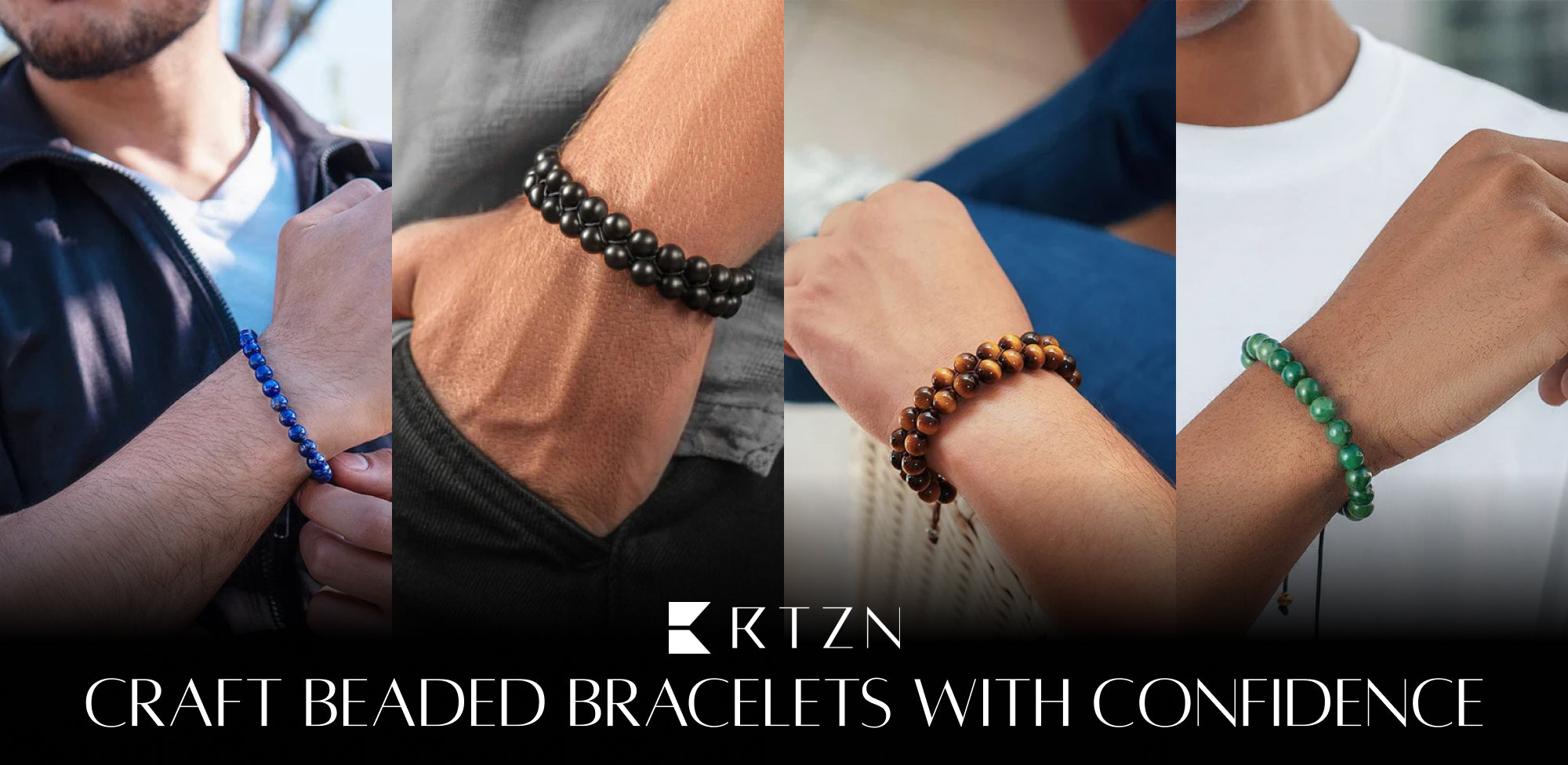
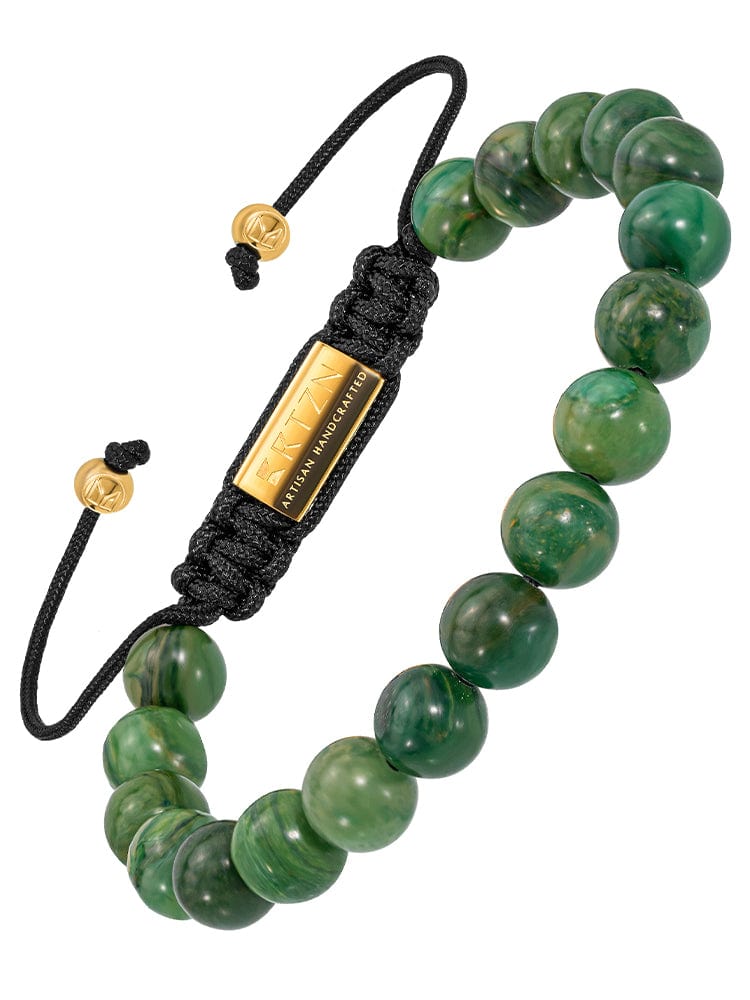
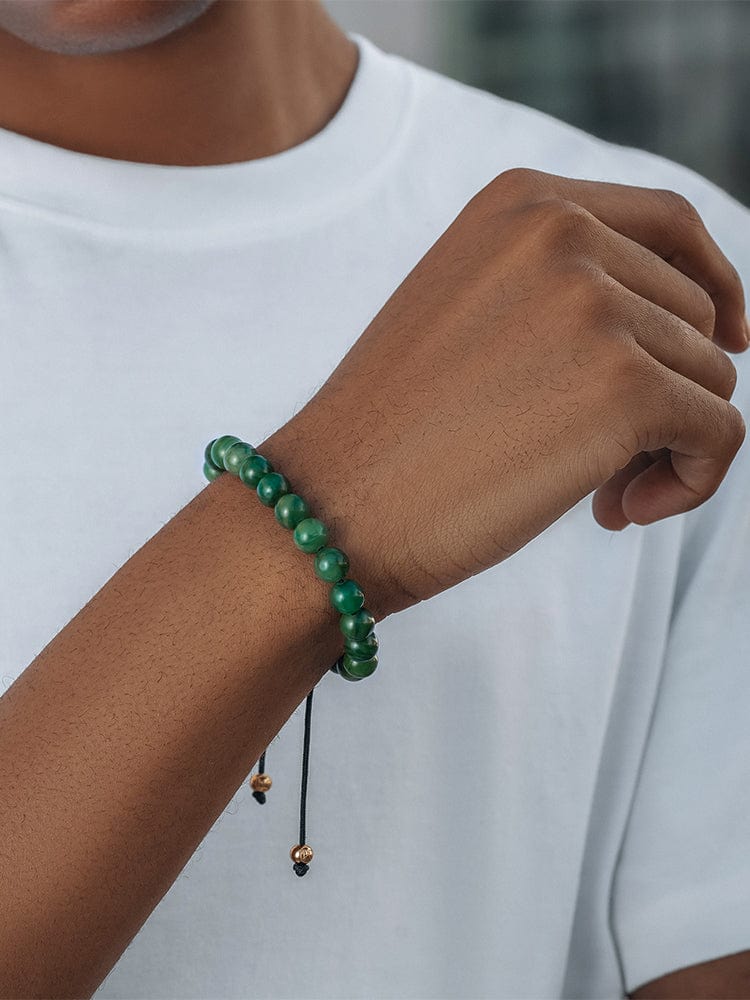
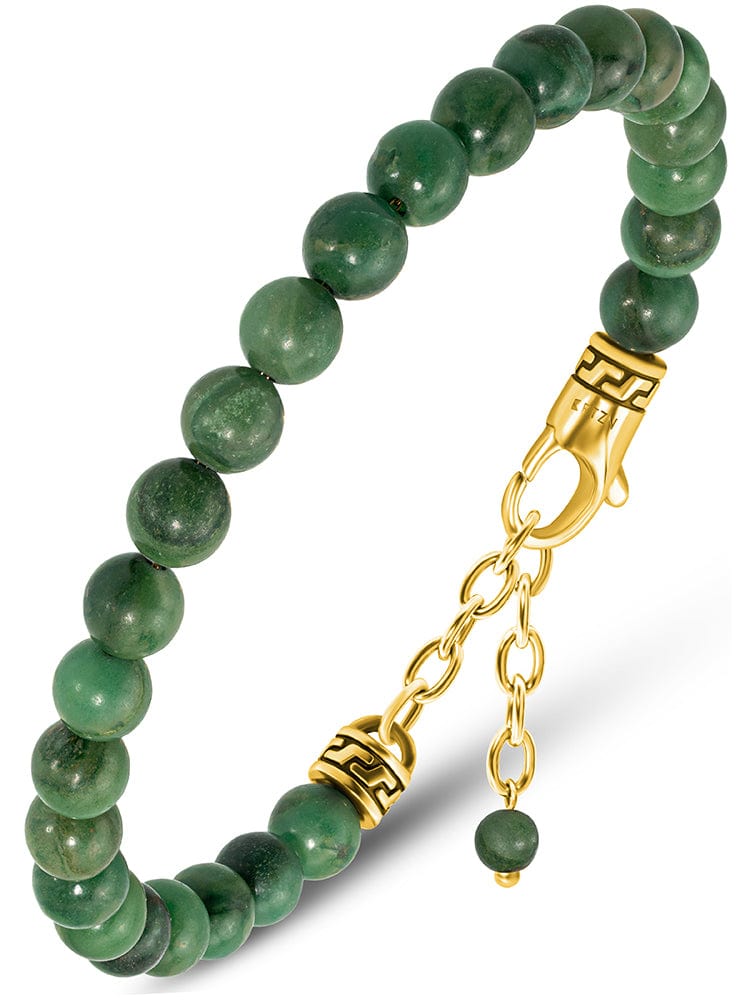
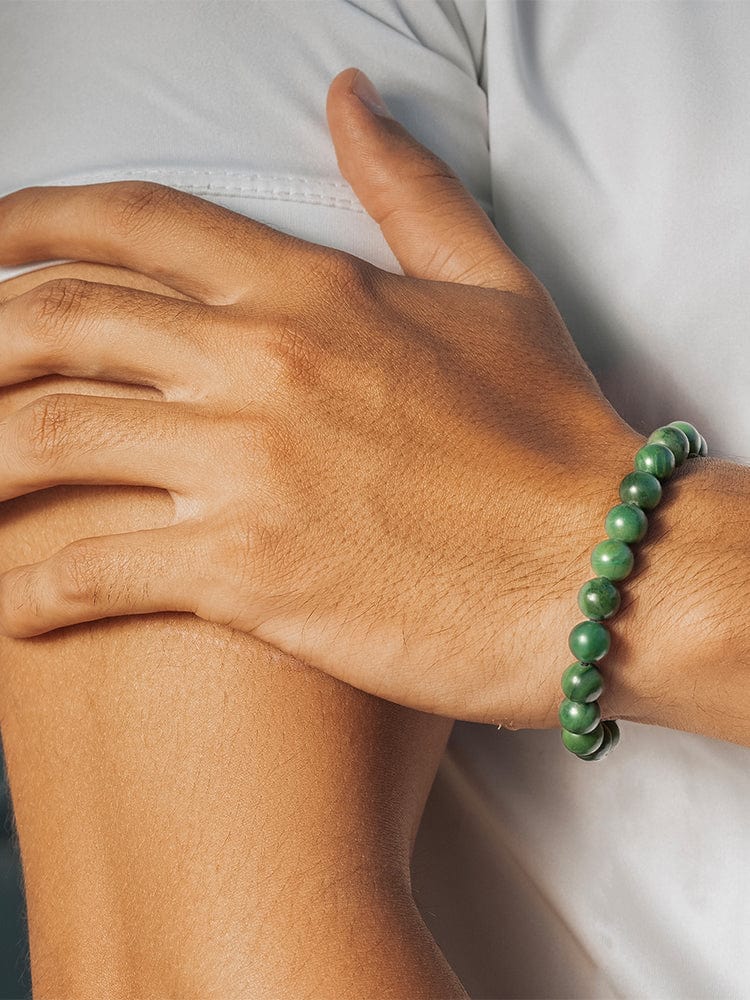
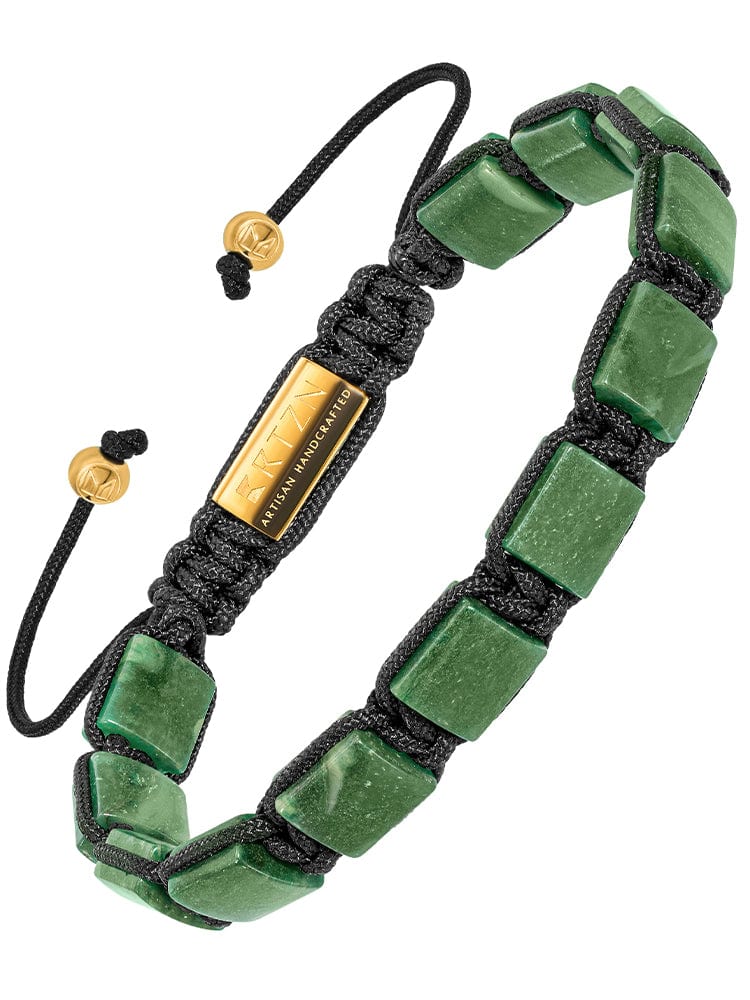
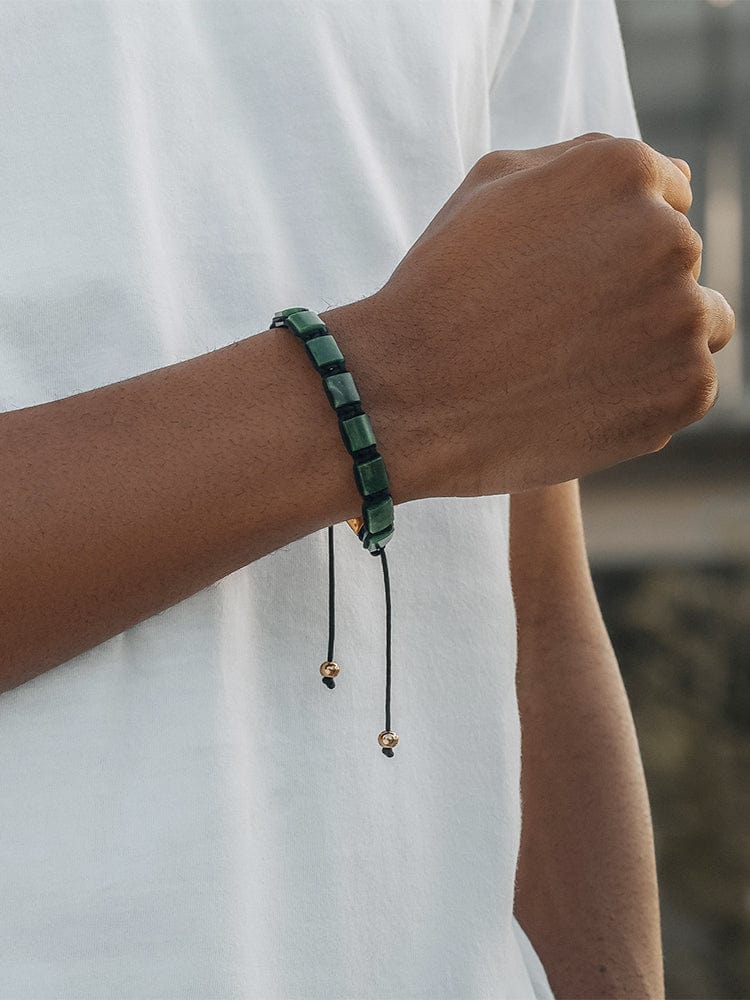
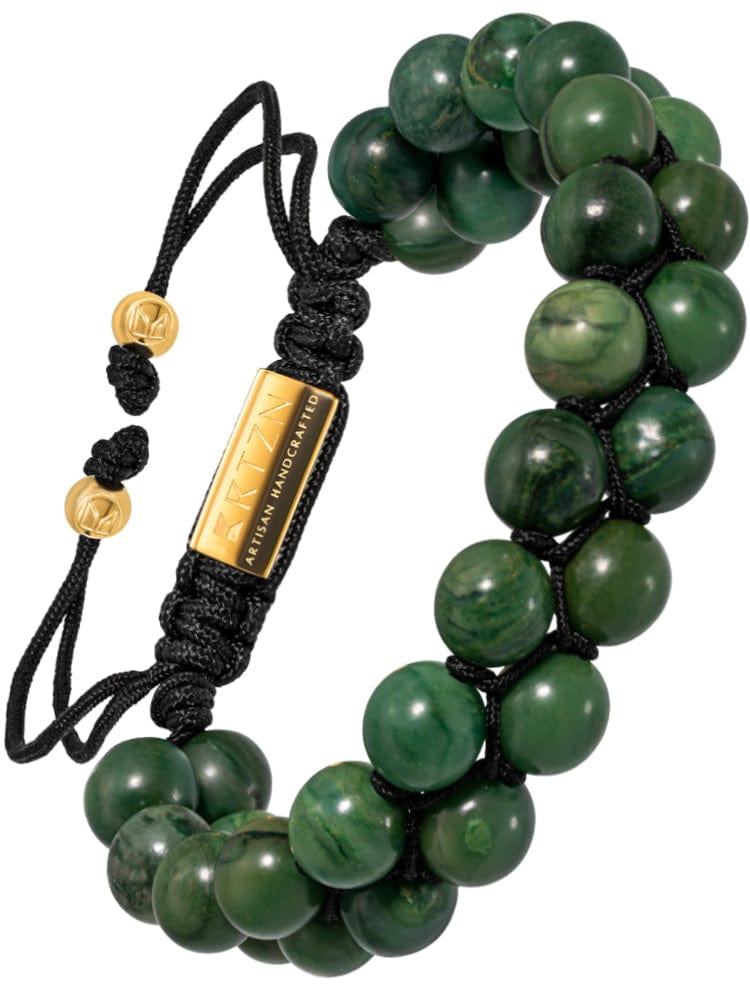
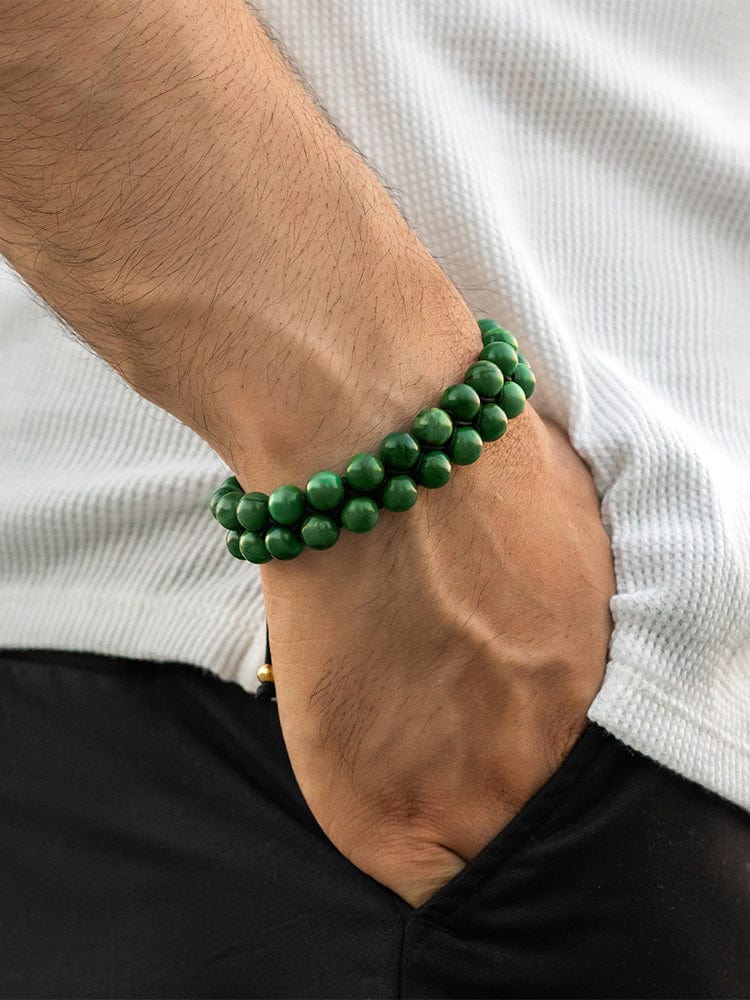
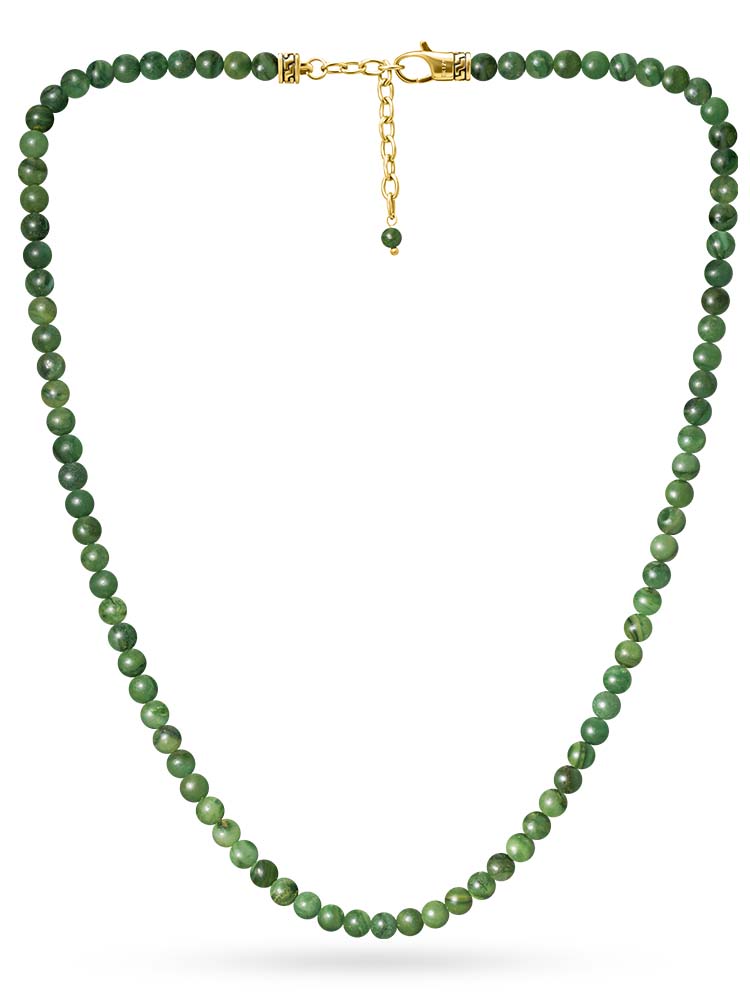
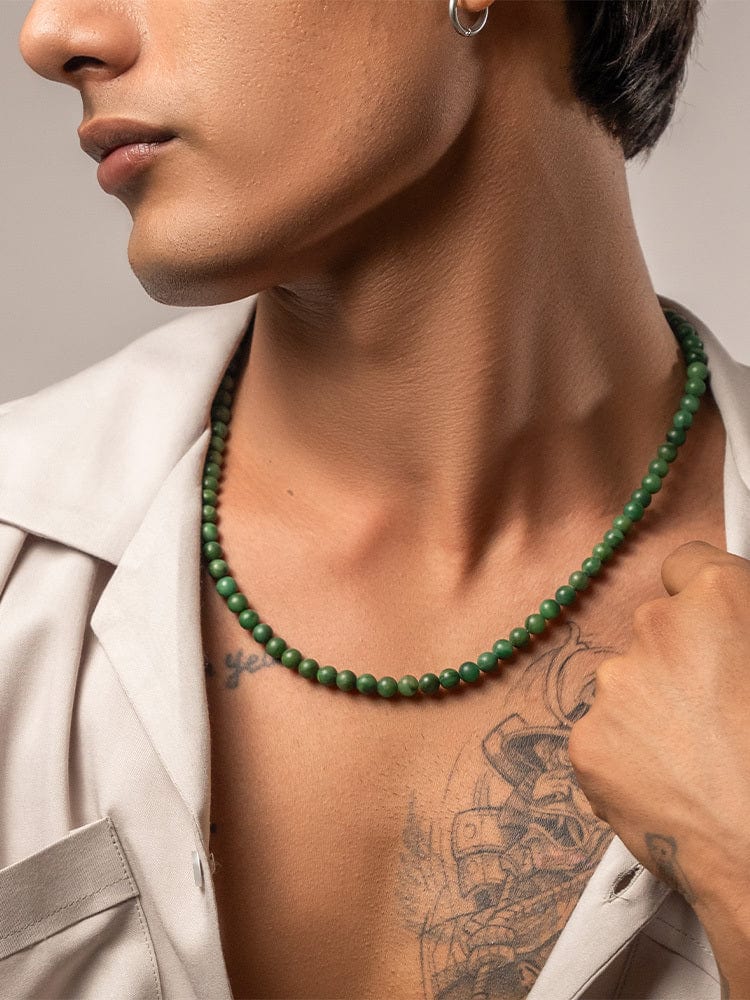
Pulseras : Una forma común en que los hombres usan el jade puede ser sutil o audaz dependiendo del tamaño y el color de las cuentas.
-
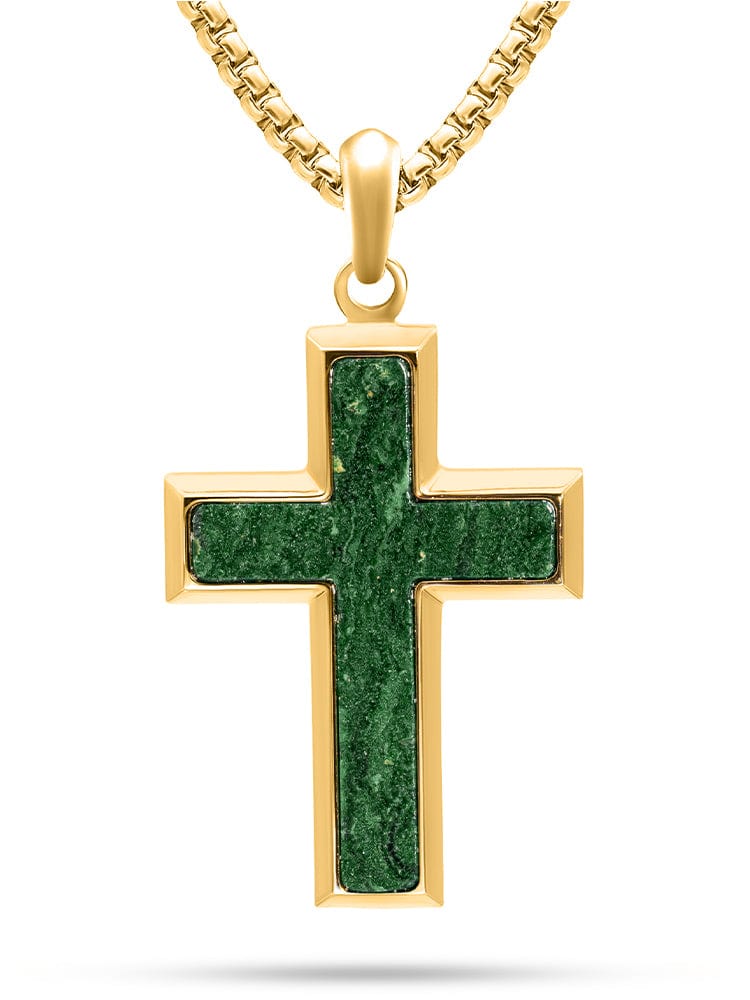
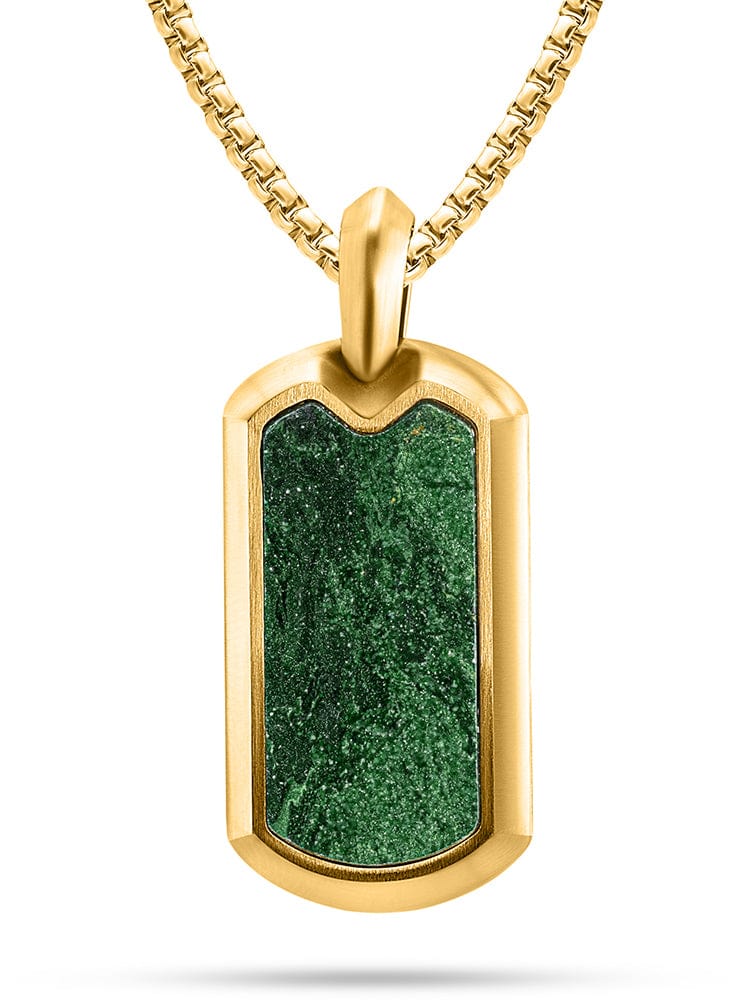
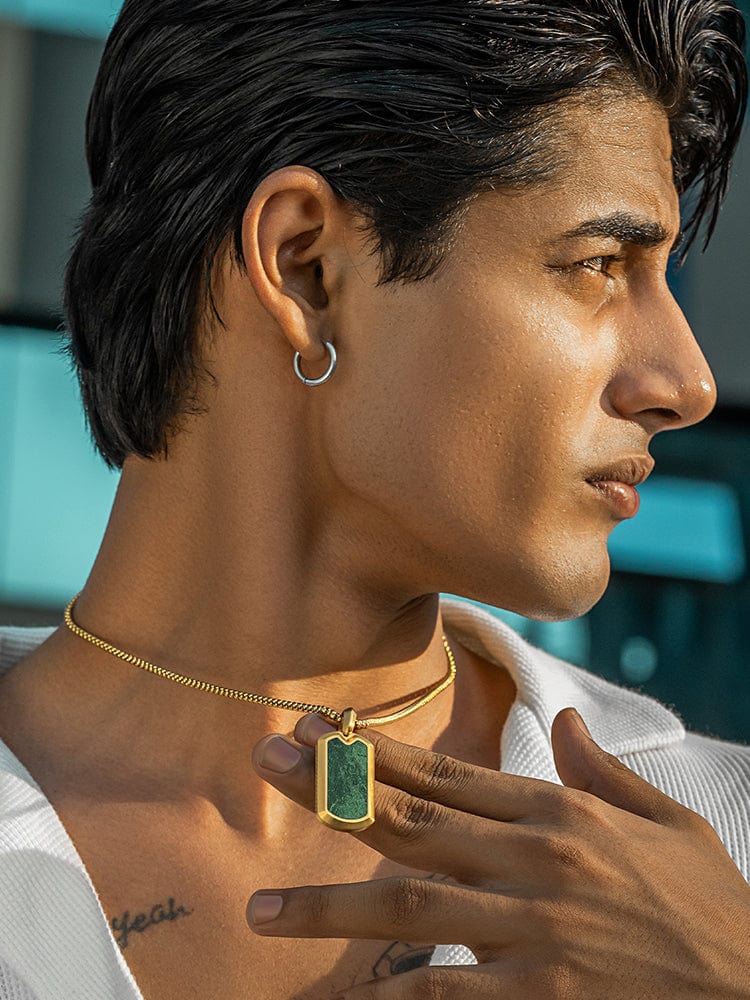
Colgantes o colgantes en cadena : Funcionan bien para minimalistas o quienes prefieren los collares.
-
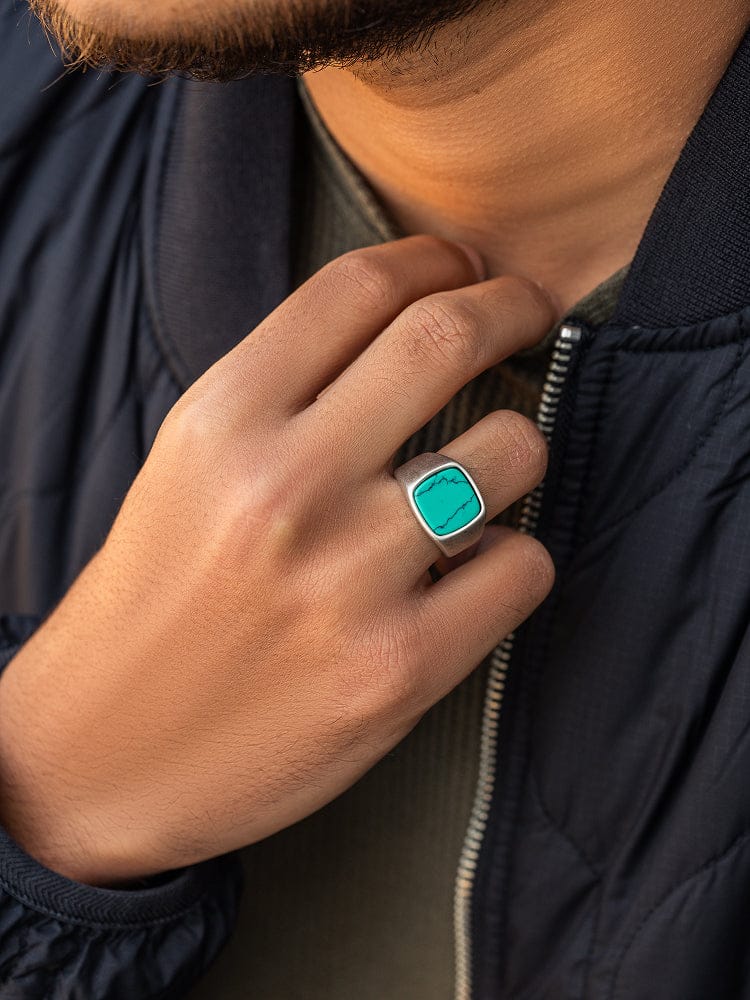
Joyas combinadas : Anillos de jade, gemelos o incluso accesorios con metal para un look más refinado y formal.
Mantenimiento y respeto
-
Mantenga su jade limpio: evite los productos químicos agresivos; un jabón suave y agua suelen ser suficientes.
-
Trátelo con cuidado: aunque es resistente, el jade puede astillarse o agrietarse si se cae o se golpea contra superficies duras.
-
Respete su herencia: úselo con intención, recordando el profundo significado cultural y simbólico del jade, lo que puede profundizar su conexión con la piedra.
6. ¿Qué representa el jade? El significado de la pulsera de jade para hombres
Cuando un hombre elige joyas de jade, a menudo representan algo más que moda. Esto es lo que puede simbolizar llevar una pulsera de jade hoy en día:
-
Equilibrio y calma interior : Un ancla en un mundo acelerado y estresante.
-
Fuerza y resiliencia : un recordatorio de resistencia, estabilidad y energía arraigada.
-
Protección y buena fortuna : Un talismán que protege contra la negatividad o la desgracia.
-
Conexión con la herencia y la tradición : un sutil homenaje a las raíces ancestrales, la sabiduría cultural y los valores atemporales.
-
Atención plena e intención : un símbolo portátil que fomenta la reflexión diaria y la vida consciente.
Para muchos hombres, el jade se convierte menos en una pieza de joyería y más en un emblema personal, un compañero en el viaje de la vida.
7. Mitos y verdades comunes sobre el jade
Dado que el jade tiene un peso mítico y connotaciones espirituales, a menudo surgen conceptos erróneos. Es útil separar la realidad del folclore.
Mito: El jade cura todas las dolencias
Verdad: Si bien el jade se ha vinculado históricamente con la salud y la curación, no existe evidencia científica que demuestre que su uso cure enfermedades. Es mejor considerarlo como un apoyo simbólico o psicológico que como una cura médica.
Mito: Todas las piedras verdes son jade
Verdad: Muchas piedras, como la serpentina, la crisoprasa y el cuarzo teñido, pueden imitar el jade. La jadeíta o nefrita auténtica posee características distintivas: estructura cristalina compacta, dureza específica (Mohs 6-7) y un pulido/brillo únicos.
Mito: El jade más grande o más oscuro siempre es más valioso
Verdad: El valor depende de la calidad, la translucidez, la consistencia del color, la claridad y la calidad del tallado, no solo del tamaño o la oscuridad. A veces, un jade sutil y de alta translucidez es más valioso que una pieza grande y opaca.
El jade en el mundo moderno: tendencias, moda y significado
En las últimas décadas, la joyería de jade ha experimentado un resurgimiento no sólo en los mercados tradicionales, sino a nivel mundial.
-
La moda masculina adopta piezas tradicionales : desde la ropa de calle hasta la vestimenta formal, las pulseras, anillos y colgantes de jade se están convirtiendo en parte del vocabulario de la moda masculina.
-
Bienestar y movimiento espiritual : a medida que crece el interés en la atención plena, la curación energética y la vida natural, el jade se adapta como un hermoso accesorio y una herramienta simbólica para el equilibrio.
-
Apreciación cultural global : más allá de sus raíces asiáticas, personas de todo el mundo ahora aprecian la historia y el significado del jade, lo que lo convierte en una piedra preciosa intercultural.
-
Elección de joyas sustentables y significativas : en comparación con los accesorios de moda o de tendencia rápida, las piezas de jade suelen ser una inversión que vale la pena, son atemporales y tienen un peso emocional o espiritual.

Cómo incorporar joyas de jade a tu estilo de vida
Si decide agregar una pulsera, un colgante o un anillo de jade a su colección, aquí le mostramos cómo hacerlo significativo y práctico:
-
Úselo a diario como un recordatorio sutil de sus intenciones, protección, equilibrio, éxito o paz interior.
-
Combinado con meditación, atención plena o trabajo de respiración, el jade puede mejorar la sensación de calma y energía centrada.
-
Combínalo con atuendos que complementen los tonos naturales del jade; la moda neutra, terrosa o monocromática funciona especialmente bien.
-
Úselo como una pieza simbólica, un regalo, un marcador de hito o un talismán portátil durante eventos importantes de la vida.
-
Trátelo como una reliquia con el cuidado adecuado, las joyas de jade pueden durar generaciones.
Reflexiones finales: ¿Por qué el jade sigue siendo importante, especialmente para los hombres?
La trayectoria del jade, desde las civilizaciones antiguas hasta las pasarelas modernas, habla de su poder y versatilidad. Como piedra preciosa, combina belleza, durabilidad y un profundo simbolismo. Como pieza de joyería, especialmente como pulsera de jade para hombre , crea un puente entre la tradición y el estilo contemporáneo.
Al usar jade, llevas más que una piedra. Llevas historia, cultura, propósito y posiblemente incluso protección. Para quienes buscan no solo moda, sino también significado, el jade sigue siendo una de las mejores opciones de piedras preciosas.
Ya sea que te sientas atraído por el jade por su elegancia estética, su resonancia simbólica o su atractivo espiritual, te estás conectando con miles de años de herencia.
En RTZN , creemos que la joyería es más que una simple decoración. Es una historia, una filosofía, una presencia. Si eliges el jade, úsalo con respeto, aprecio y una intención consciente.